


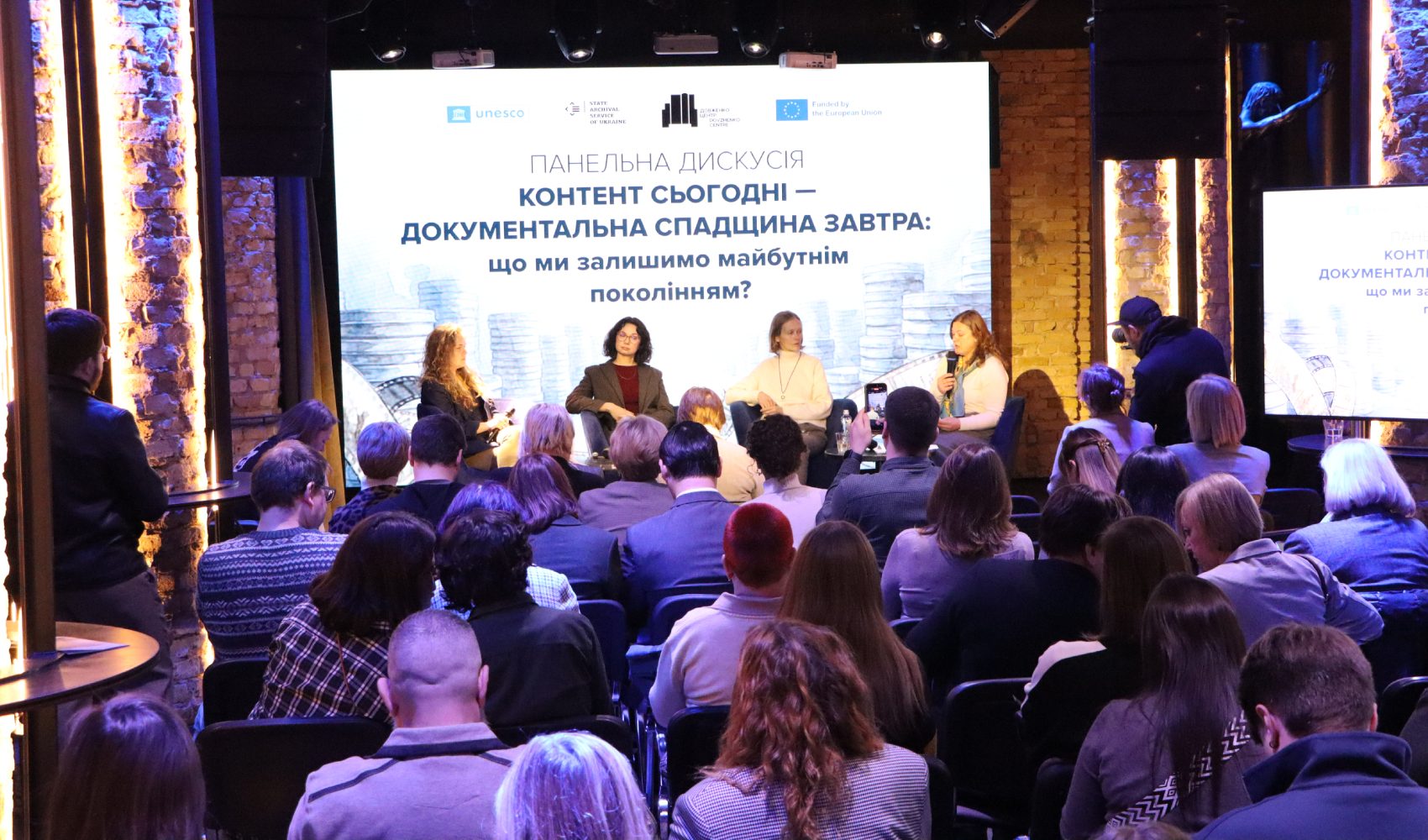
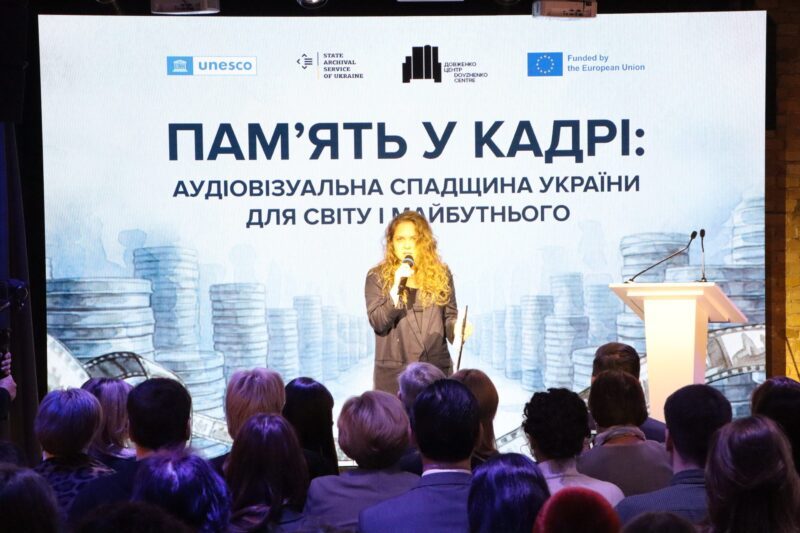
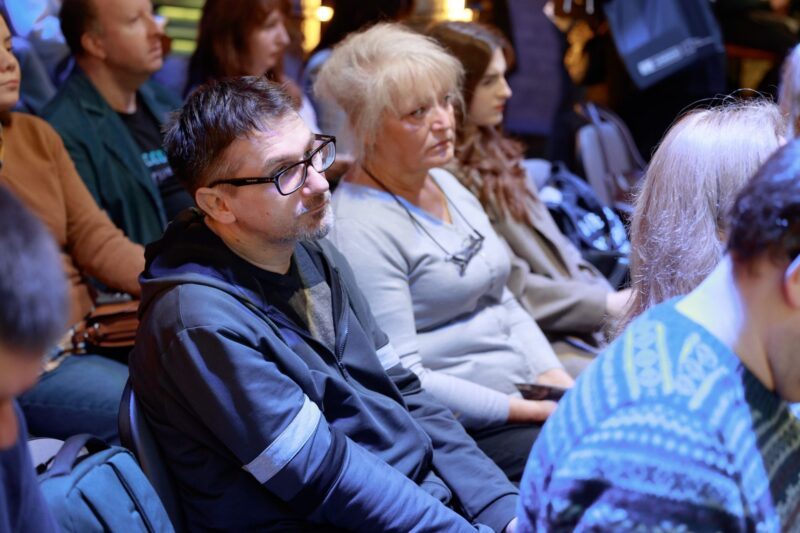
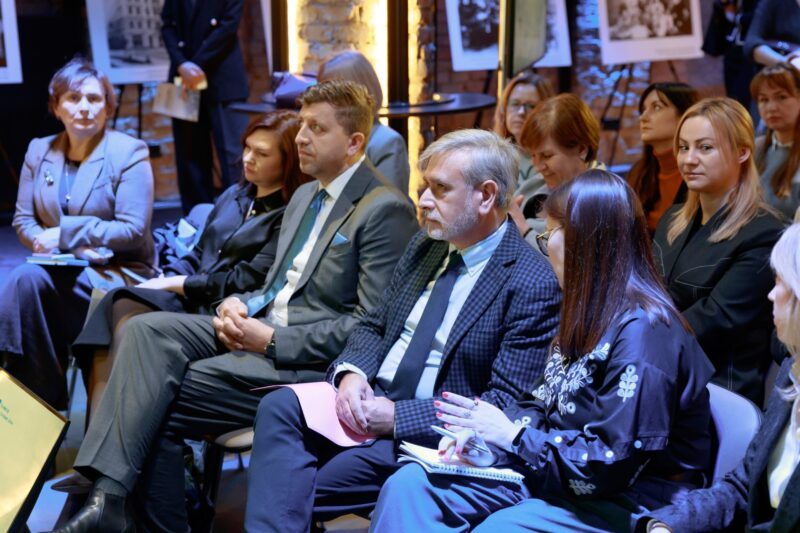
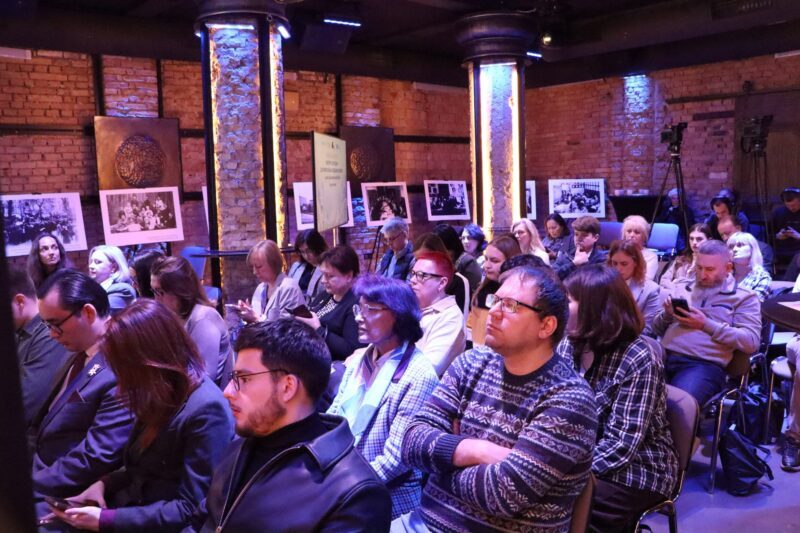
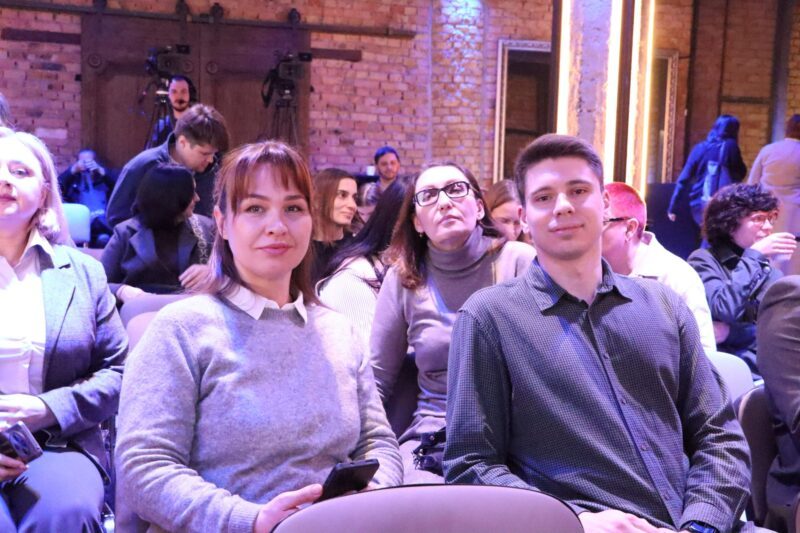
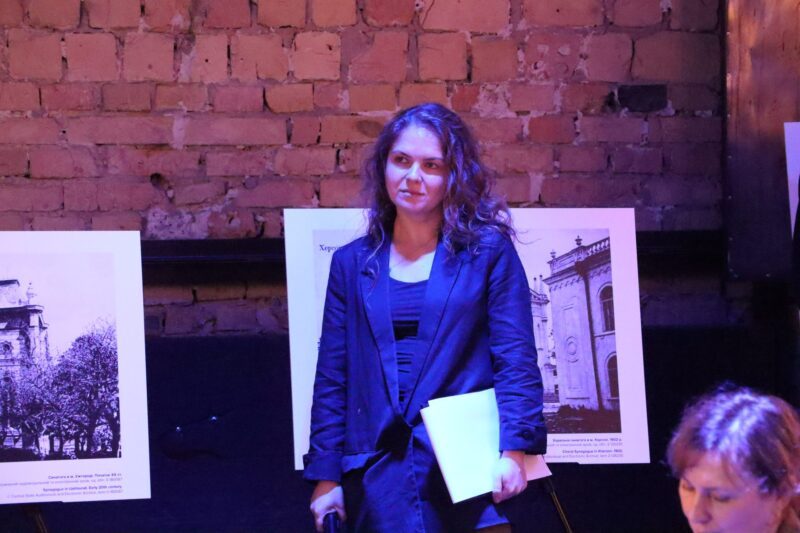
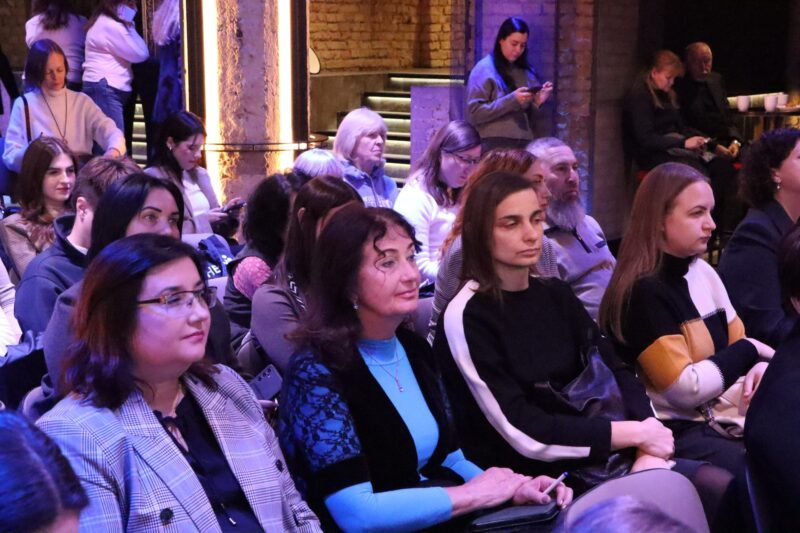
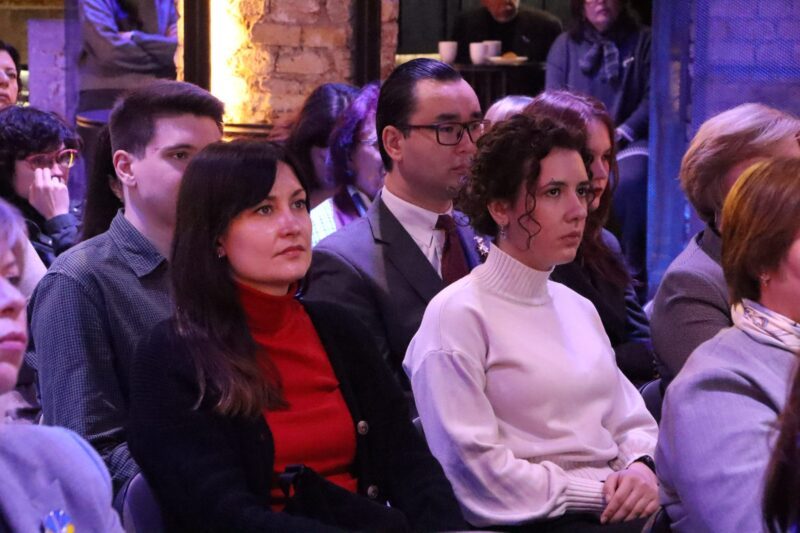
War threatens people’s lives, cultural heritage sites, and materials that preserve the history of our time: video recordings, photographs, newsreels, and audio archives. We must protect them from loss, ensure the safety of the people whose stories they tell, and guarantee access to these records for future generations. On October 27, during the event «Memory in Focus: Ukraine’s Audiovisual Heritage for the World and the Future» dedicated to UNESCO’s World Day for Audiovisual Heritage, participants discussed how media outlets, archives, and cultural institutions can join forces to preserve audiovisual heritage.
The discussion was organized by UNESCO Antenna in Ukraine in collaboration with partners and with the support of the European Union. The National Committee of the UNESCO “Information for All” (IFAP) Programme, headed by the Chair of the National Council Olha Herasymiuk also helped to organize the event.
In their opening remarks, the speakers discussed why audiovisual materials are important for preserving historical memory and documenting Russian aggression.
Asier Santillan, Head of Section for European Integration, Governance, Rule of Law, and Civil Society at the EU Delegation to Ukraine highlighted the changes that the digital age has brought to working with such materials. Archives, he said, help us understand how people lived in the past and how the world is changing.
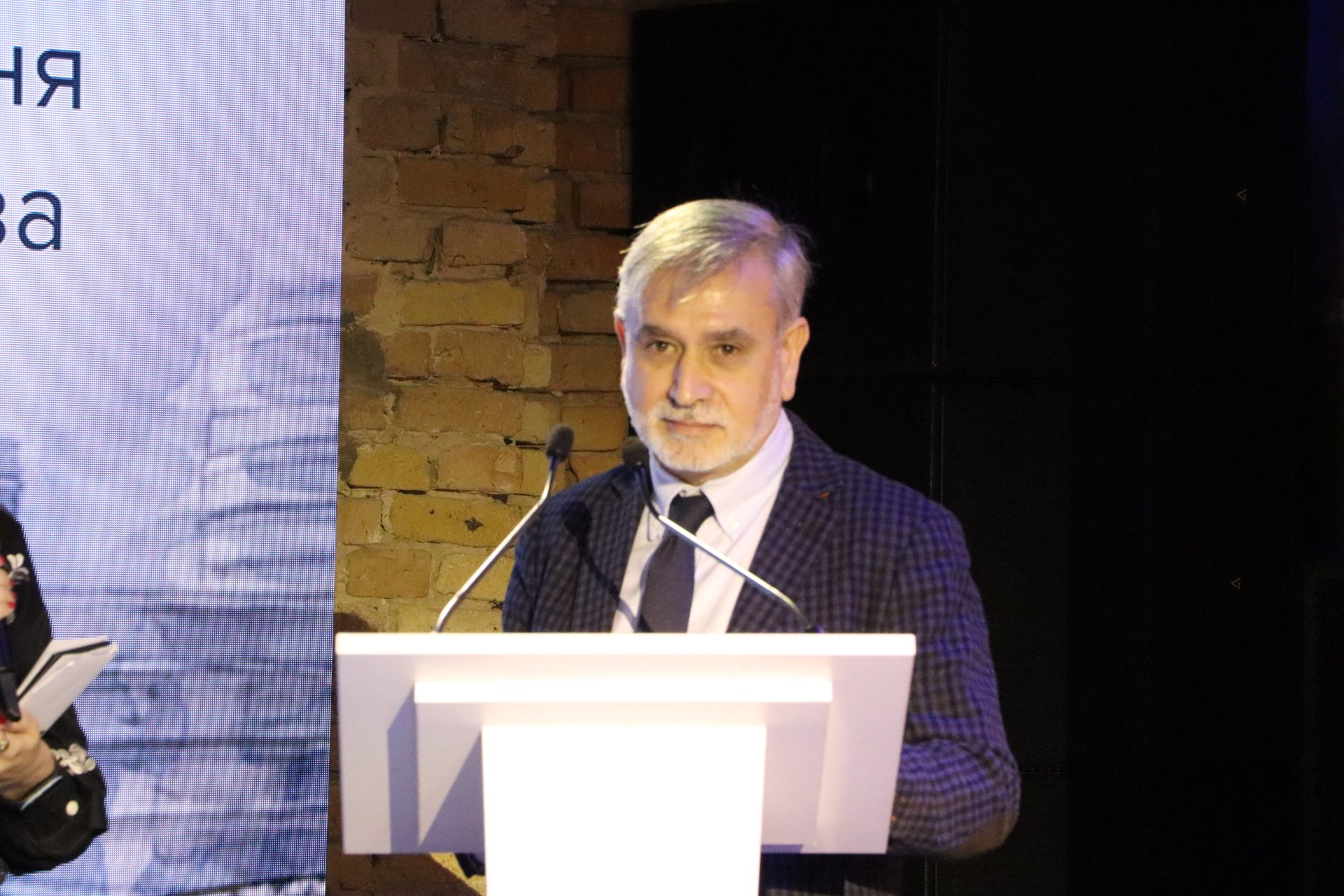
Anatolii Khromov, Head of the State Archival Service of Ukraine, noted that audiovisual documents are an important part of the National Archival Fund. Working with them requires addressing many issues—from access to information and compliance with copyright laws to the protection of personal data.
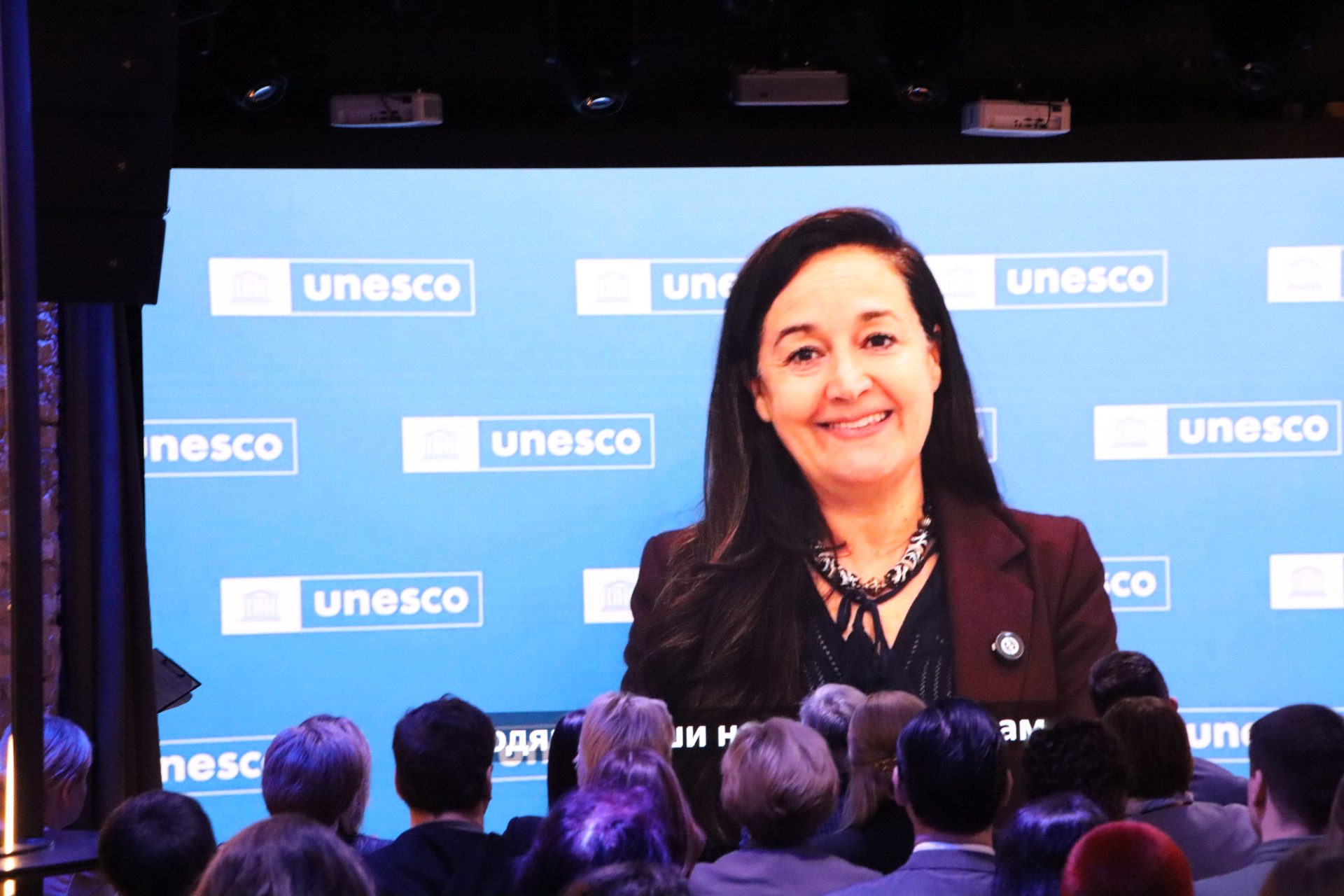
Chiara Dezzi Bardeschi, Head of the UNESCO Antenna in Ukraine, spoke about international initiatives to preserve documentary heritage, particularly the “Memory of the World” programme. She emphasized that during a full-scale war, it is especially important to preserve authentic records and ensure access to them. This helps counter the distortion of history and leave future generations with truthful accounts of current events. Chiara Dezzi Bardeschi also remarked the work of Ukrainian institutions and experts who continue to preserve cultural heritage despite the war.
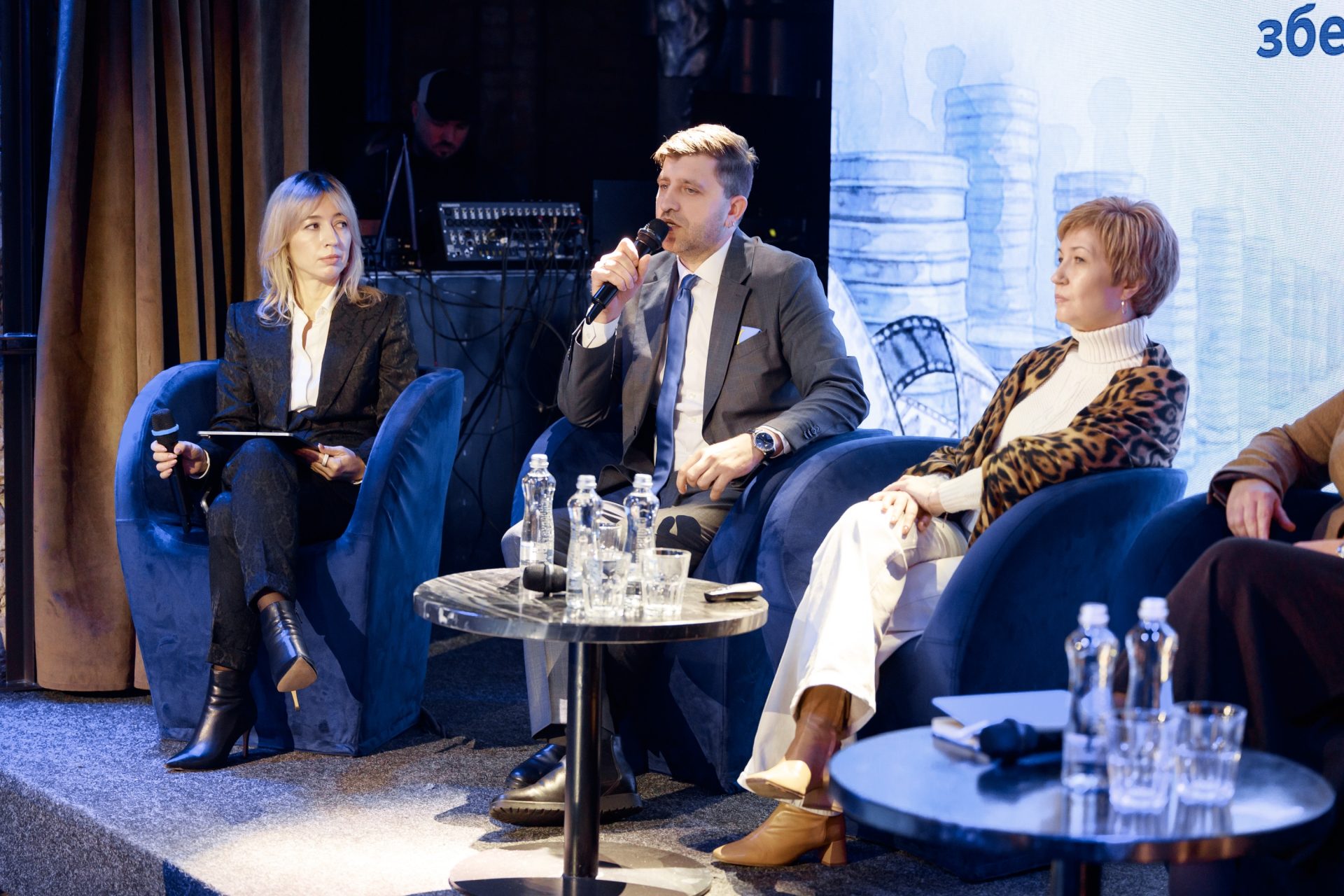
The Agenda included two panel discussions. The first session, “Ukraine’s Audiovisual Heritage: Common Challenges and Preservation Strategies,” focused on the experiences of Ukrainian institutions, the challenges of protecting audiovisual materials during wartime, and opportunities for international cooperation. The second discussion—“Today’s Content, Tomorrow’s Documentary Heritage: What Will We Leave for Future Generations?”—focused on collaboration among media outlets, archives, and organizations documenting the events of the war.
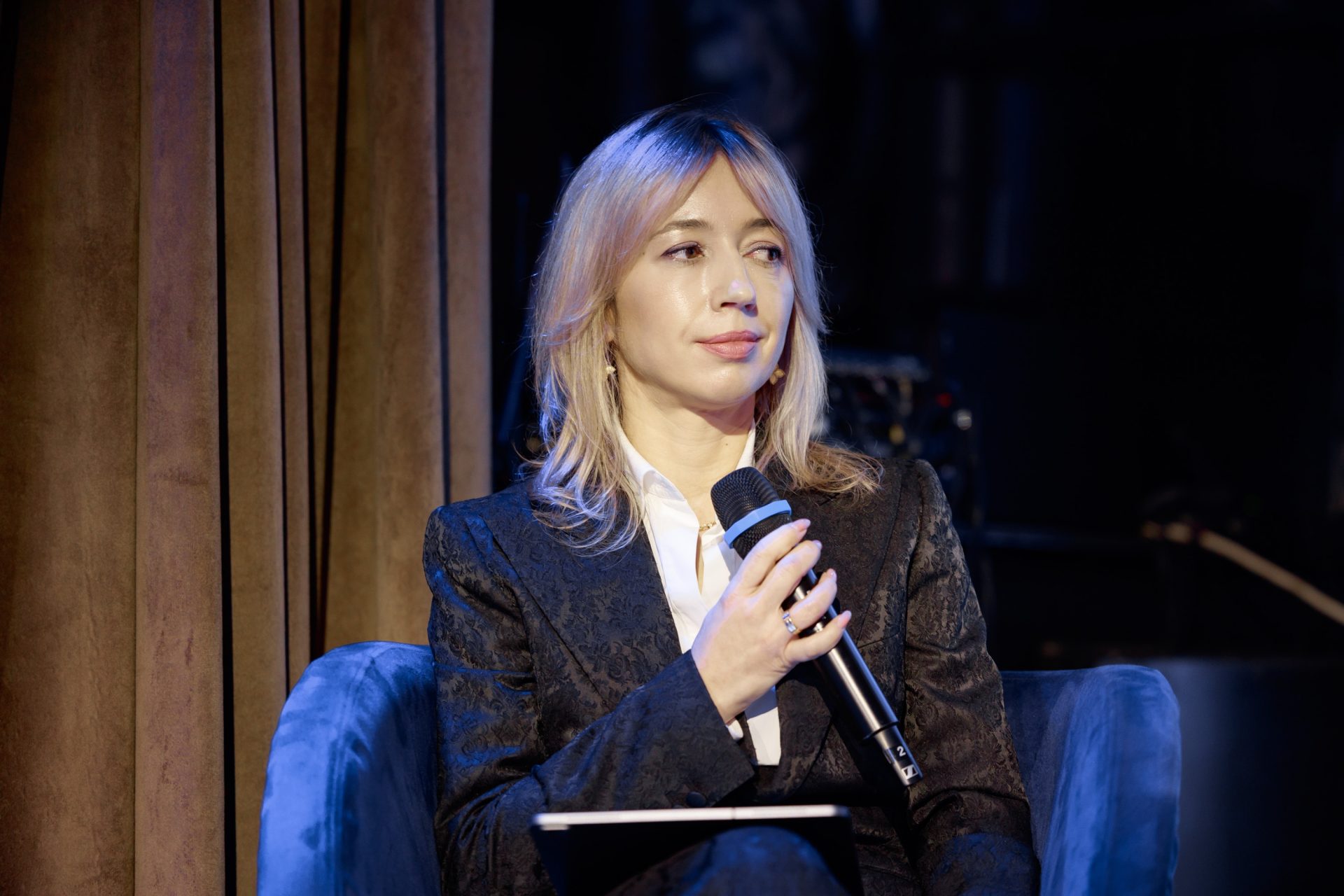
The discussion was moderated by Liliia Oleksiuk, Head of the All-Ukrainian Association for Information Security and Information Technologies and a Member of the IFAP Information Preservation Working Group. Participants in the discussion included Viktoriia Yermolaeva, editor-in-chief of Hromadske Radio; Olena Honcharuk, creative director of the Oleksandr Dovzhenko National Center; and Iryna Pavliukovska, Head of the partnerships department at the War Archive.
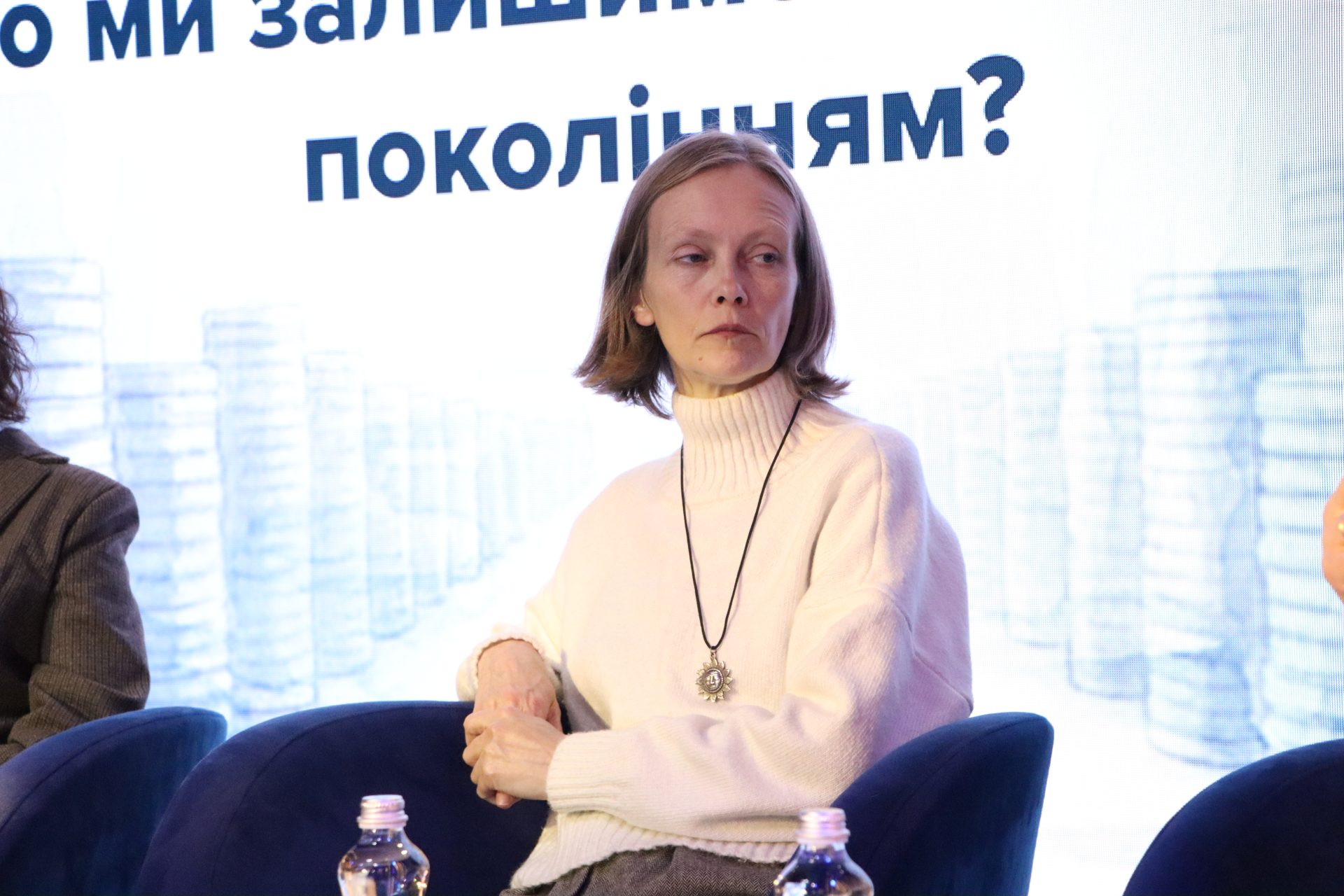
The discussion focused on collaboration between the media and archives: how to transfer materials for storage, locate the necessary documents, and use them in journalistic work. Viktoriia Yermolaeva noted that establishing such collaboration is often hindered not by a lack of willingness, but by a lack of time and information about each other’s capabilities. In her opinion, archives should be more proactive in informing the media about their collections and explaining how journalists can work with the preserved materials.
Olena Honcharuk shared her experience of collaboration between the Oleksandr Dovzhenko National Center and the War Archives and discussed the use of tools for searching and analyzing materials from open sources. She also emphasized the need to store copies of materials in different locations to protect them from loss.
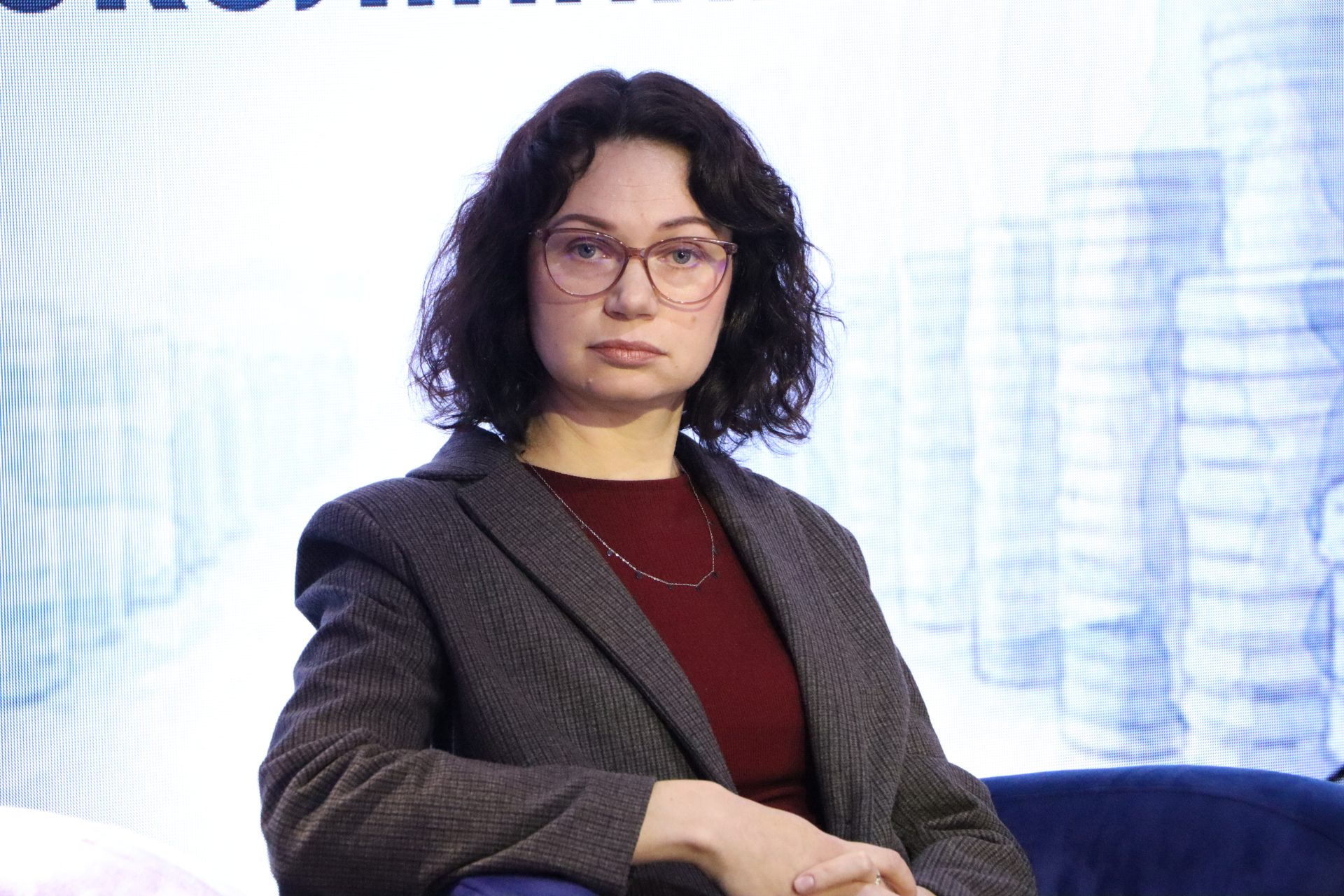
Iryna Pavliukovska emphasized that documentation requires strict adherence to methodology. It is important to preserve originals and proof of the materials’ authenticity, to record the circumstances under which they were obtained, and to protect personal data. Particular attention should be paid when working with testimonies from people whose relatives may still be in the temporarily occupied territories.
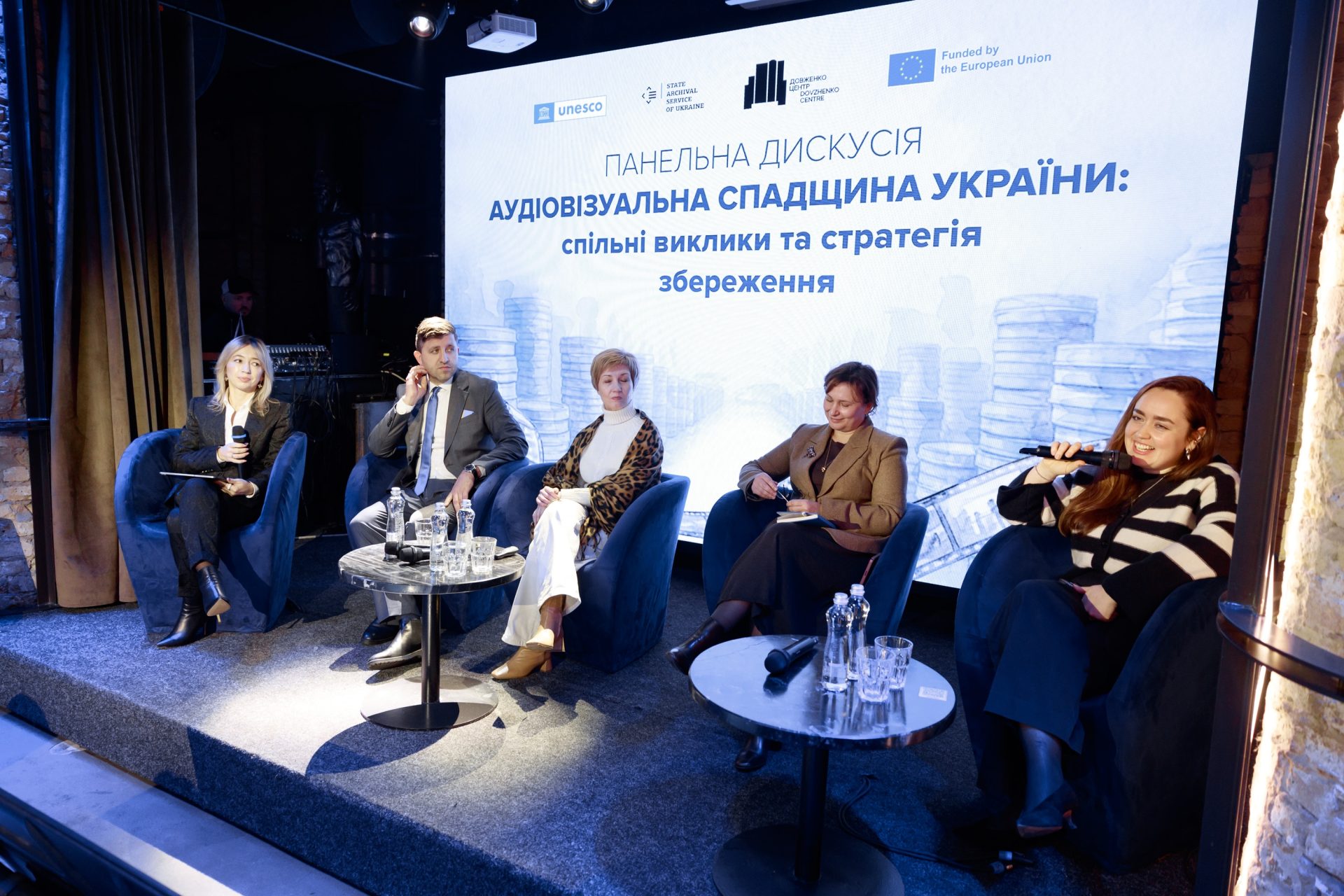
During the discussion, Liliia Oleksiuk asked how to establish cooperation between the media and archival institutions so that journalists could find and use materials to prepare publications. In response to this question, Viktoriia Yermolaeva emphasized that archives should be more proactive in informing newsrooms about their collections and explaining how to access the materials. Such cooperation would help the media find reliable historical evidence and use it in their work.
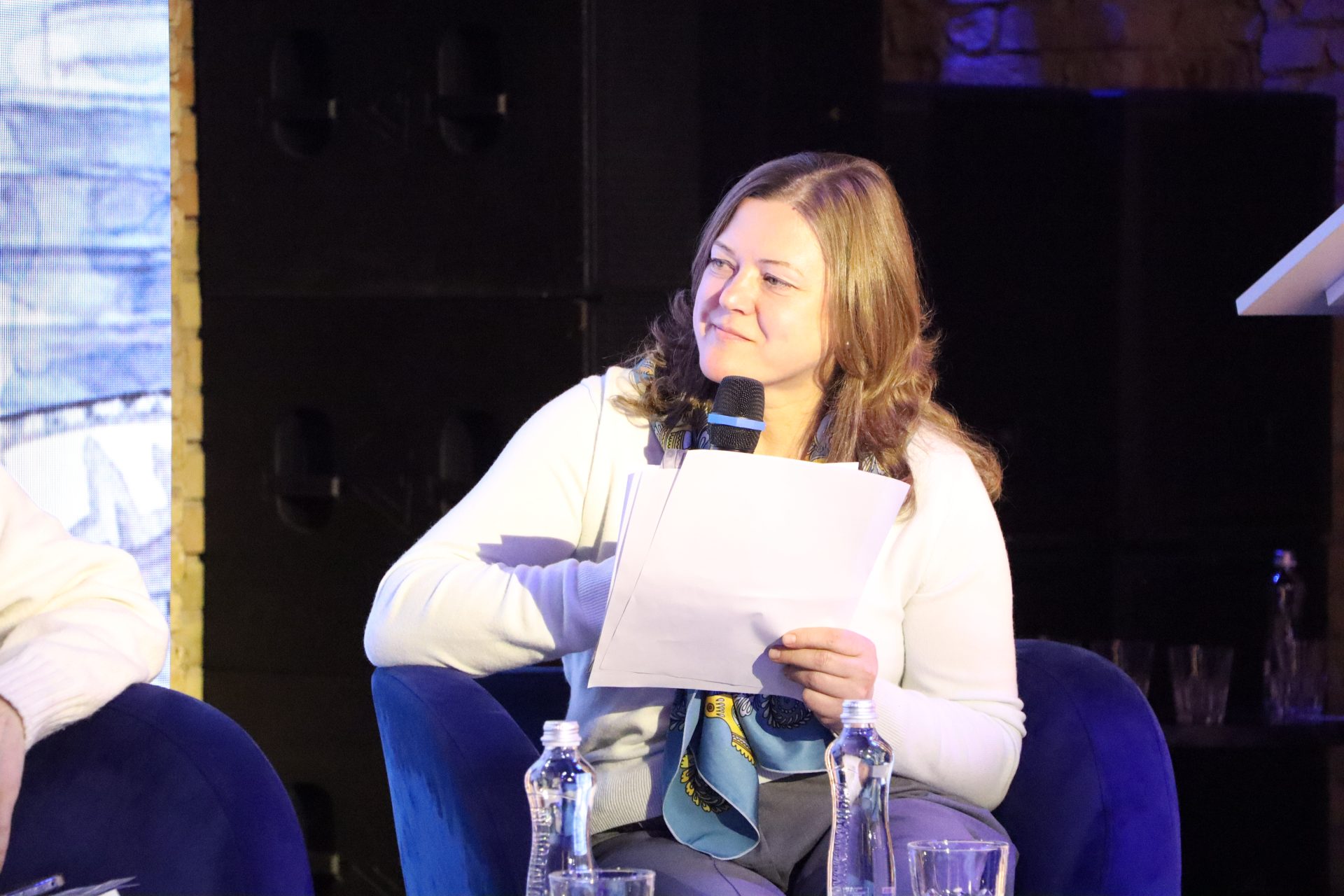
The participants agreed that this kind of work requires ongoing professional dialogue and an understanding of each other’s capabilities. After all, the preservation of audiovisual heritage depends not only on technology and resources, but also on the willingness of media outlets, archives, and cultural institutions to collaborate.
At the end of the event a demonstration of archival video took place.
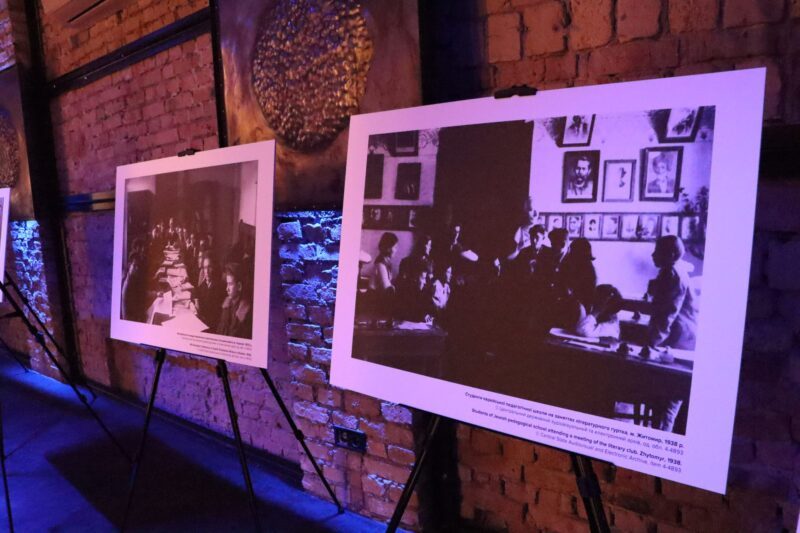
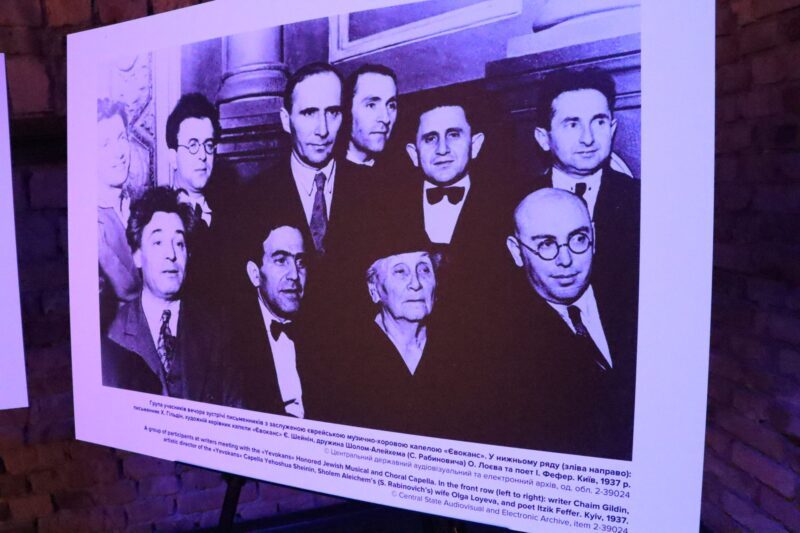
Representatives from the Ministry of Culture of Ukraine, the State Archival Service of Ukraine, UNESCO, the EU Delegation to Ukraine, the Dovzhenko Center, Hromadske Radio, the War Archive, Suspilne Mediateka, and other institutions joined the discussion.
As a reminder, the issue of preserving documentary heritage was discussed during an international conference dedicated to the 25th anniversary of UNESCO’s “Information for All” programme. A separate panel was dedicated to the “Memory of the World” programme, specifically addressing how war heightens the need to protect archives and how digital technologies help preserve documents and make them more accessible to future generations.
For your information, the Ukrainian “Memory of the World” committee was established in August 2024 as part of the National Committee of Ukraine for the UNESCO “Information for All” (IFAP) Programme. Its work is linked to UNESCO’s international “Memory of the World” programme, which aims to preserve and promote humanity’s documentary heritage.

