


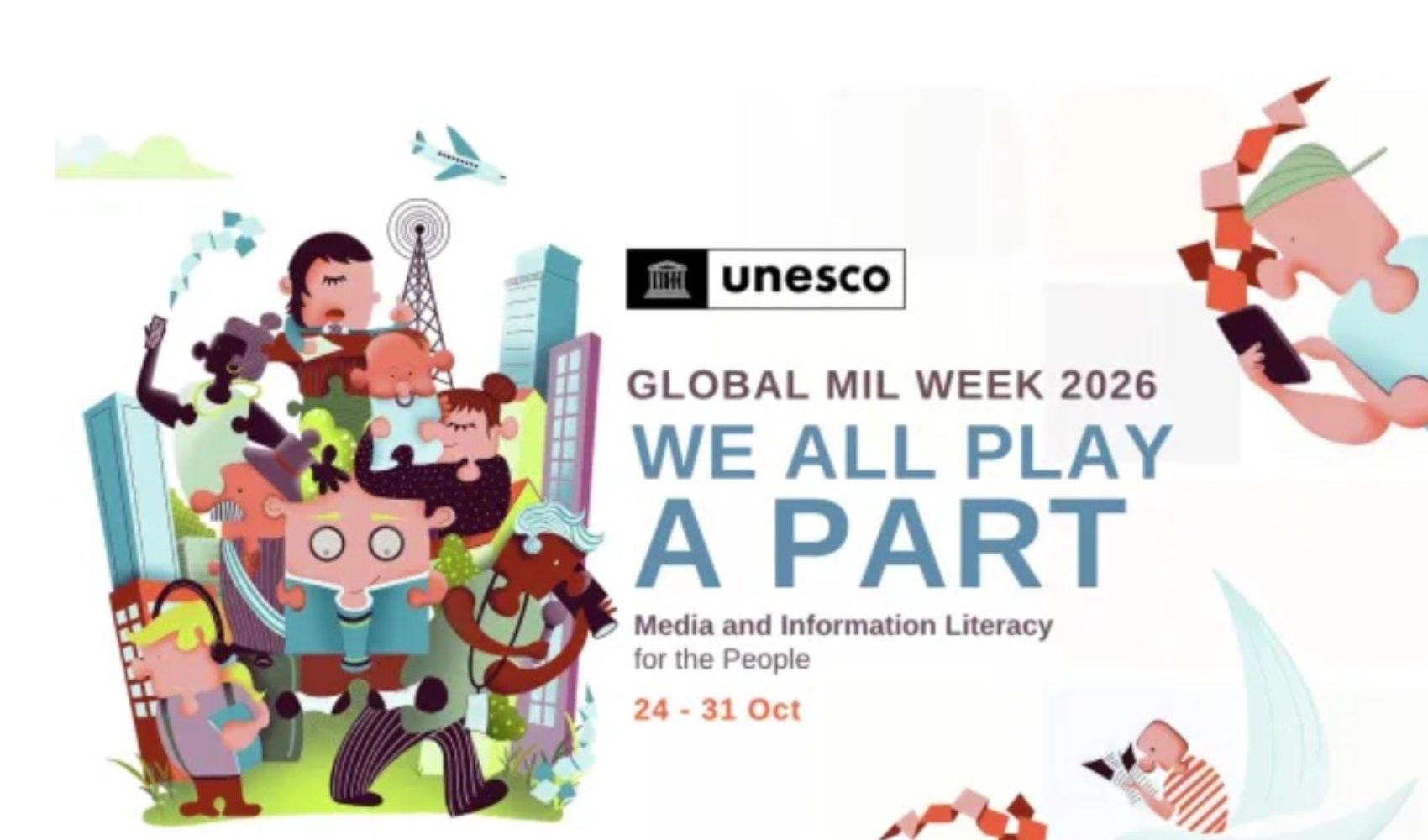
From October 24 to 31 the World celebrates Global Media and Information Literacy Week (Global MIL Week). This year’s theme is “We All Have a Role to Play: Media and Information Literacy for People.”
Above all this is an opportunity to bring together those who shape today’s information environment: the media, regulators, educators, researchers, young people, digital content creators, civil society organizations, parents, and representatives of government institutions. In 2026, the emphasis is specifically on shared responsibility: the development of media and information literacy depends not on a single sector or professional community, but on the participation of everyone.
The history of Global MIL Week began in 2012 as an international initiative under the auspices of UNESCO. Then it received official global status. In November 2019, the UNESCO General Conference designated October 24–31 as the annual Global Media and Information Literacy Week. And in March 2021, the UN General Assembly adopted a corresponding resolution.
Since then, the Week has become an international platform for discussing how people work with information, assess its credibility, use digital technologies, and interact with the media. Information and media literacy is a set of knowledge and skills that help people search for and obtain information, evaluate it critically, use it responsibly, and create their own content.
During the war, media literacy has become an integral part of national security. Disinformation and manipulation, hate speech, the rapid development of artificial intelligence, social media recommendations, and the vast amount of content are changing the way we receive and perceive information. It is important to understand who created it, for what purpose, what it is based on, and whether it is trustworthy.
For the National Council, the development of media literacy is part of a systematic effort to improve the quality of the information environment and the resilience of Ukrainian society.
The regulator works with the media and the professional community, conducts research, educational events, and training sessions, develops partnerships with Ukrainian and international organizations, and supports practical tools that help media professionals work responsibly amid disinformation, technological changes, and new digital challenges.
At the same time, media literacy isn’t just for those who create news or professional content. It starts with the everyday decisions each of us makes: which source to open, whether to verify what we see, whether to trust an emotional headline, or whether to share a post.
Our video for Global Media and Information Literacy Week is all about these daily choices. It reminds us how the media and the ways we get information have changed—and why, no matter what technology we use, the need to think critically, verify facts, and approach what we read, watch, and share responsibly remains constant.
Media literacy doesn’t start with distrusting everything. It starts with the question: “Where does this information come from?”
Throughout the week, the National Council will be sharing events, initiatives, and helpful resources on media literacy on its official website and social media pages.

