


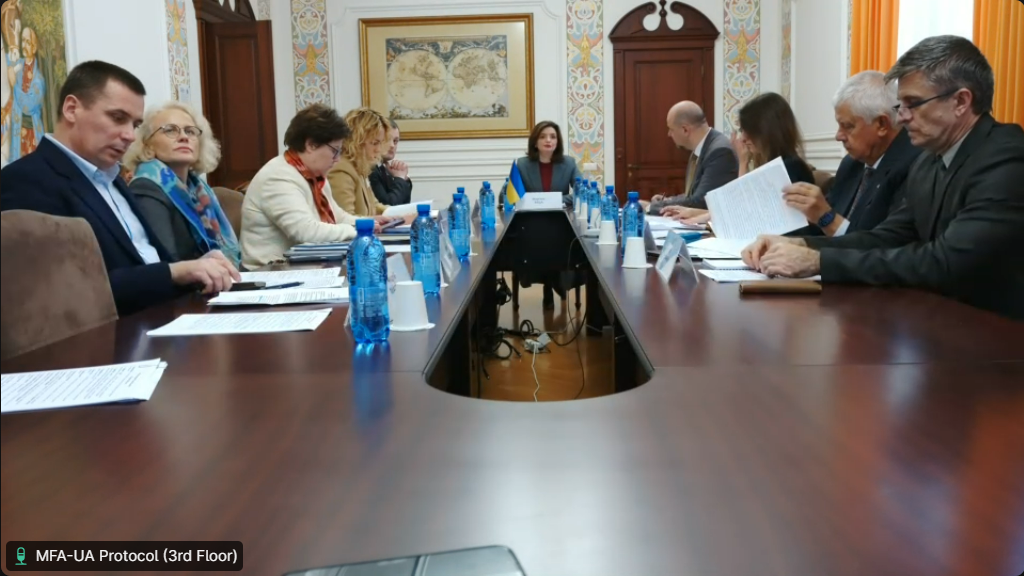
On October 29, a meeting of the Bureau of National Commission of Ukraine for UNESCO was held, during which the commission summarized its work over the past six months and set priorities for future activities. Olha Herasymiuk, Chair of the National Council, presented the results of the work carried out by the Communication and Information Sector, which she heads.
Mariana Betsa, President of the National Commission, reported that during Ukraine’s year of membership on the UNESCO Executive Board, five resolutions were adopted in support of our country. At the same time, many countries limit themselves to general calls for peace. Therefore, Ukraine must continue its efforts to ensure that its issues remain at the center of UNESCO’s attention by contributing to the resolution of global challenges.
During the meeting, discussions focused on reforming UNESCO and its bodies as part of the “UNESCO-80” Roadmap. Mariana Betsa emphasized that one of the areas of reform should be the improvement of international mechanisms for the protection of culture and education.
“In the context of war, especially during its most active phase, World Heritage status is not enough to truly protect a site. Therefore, a new mechanism is needed. We must consider what tools could be used for emergency assistance, restoration, documenting the crimes committed by Russia, and strengthening accountability,” she said.
Olha Herasymiuk presented the work of the Communication and Information Sector, specifically regarding three programmes currently operating in Ukraine: “Information for All” (IFAP), the International Program for the Development of Communication (IPDC), and “Memory of the World.”
UNESCO is currently working on reforming IFAP. The Bureau, where Olha Herasymiuk serves as vice-chair, unanimously approved Ukraine’s proposal to make the programme’s working groups more transparent—by publishing meeting agendas, information about events, and the results of their work. They also unanimously supported Ukraine’s proposal for an audit of the programme covering the period from 2007 to 2026. Olha Herasymiuk has joined the expert group that will participate in the external evaluation of the programme.
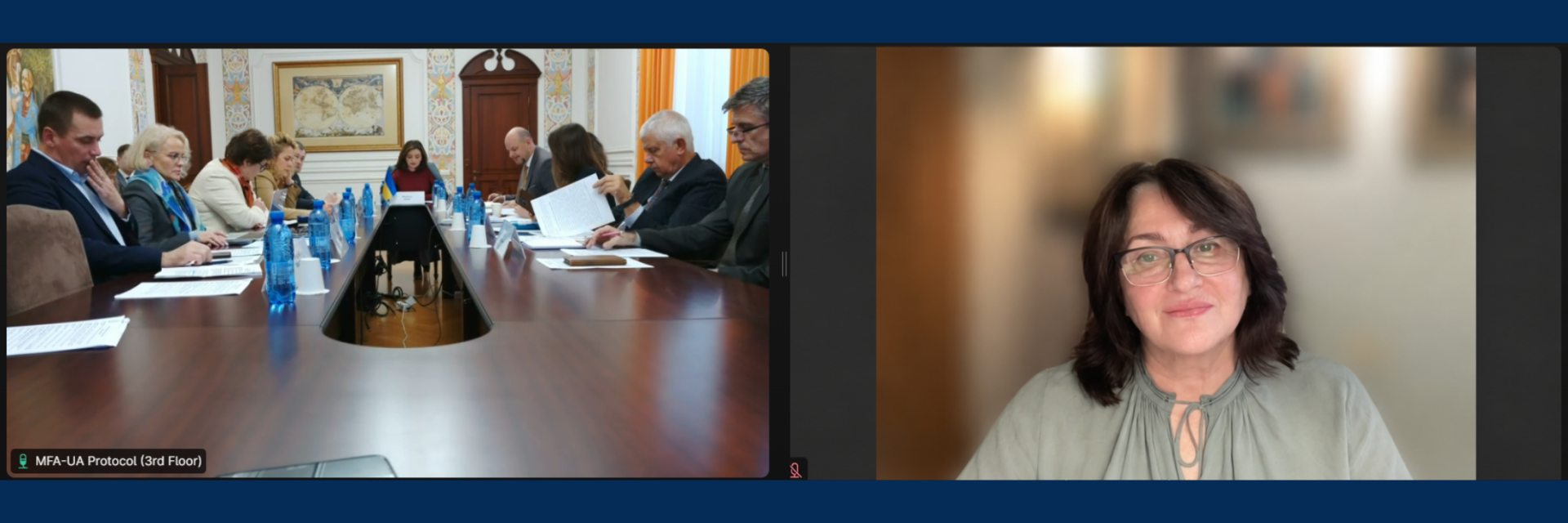
UNESCO values Ukraine’s experience in ensuring the resilience of the information environment in the face of military aggression. “UNESCO representatives highly commended the work of the Ukrainian IFAP National Committee. Our Ukrainian initiatives are viewed as a comprehensive contribution to improving the organization’s overall response mechanisms to contemporary challenges,” said the Chair of the National Council.
Ukraine is the first country who marked the 25th anniversary of the IFAP programme at the national level by hosting a major conference attended by representatives of UNESCO, government institutions, and the public.
National committees are also working on issues related to the impact of Russian aggression on freedom of speech, the safety of journalists, and access to and preservation of information. In particular, they are contributing to the development of a Ukrainian draft law on protecting journalists from baseless lawsuits and are proposing to supplement international approaches to information literacy with the principle of information integrity. An important focus of their work is sharing Ukraine’s experience in countering disinformation and promoting media literacy.
The National Committee of the UNESCO “Memory of the World” Programme has just begun developing selection criteria for documentary heritage to be included in the national register. The National Committee of IPDC is devoting significant attention to the issue of age discrimination in the media.
“We have prepared recommendations for the media on how to cover issues related to older adults in an ethical and appropriate manner. The media must understand this and stop stigmatizing older adults,” said Olha Herasymiuk.
And this is fully in line with the vision of reforming the programme’s work as people-centered, focused on the value of human life and respect for human dignity.
Ukraine’s experience in countering information threats, protecting journalists, and preserving access to information helps shape international approaches to information resilience. This involves countering propaganda, protecting those who create information, ensuring media accountability, and preserving documentary memory and public trust. These challenges are relevant beyond Ukraine’s borders as well, which is why Ukrainian experts are joining the effort to find common solutions to them.
The meeting also addressed elections to UNESCO’s conventional and working bodies, the preparation of nominations for inclusion on the UNESCO World Heritage List, nominations for the Representative List of the Intangible Cultural Heritage of Humanity, and entries for the UNESCO Calendar of Commemorative Dates.

