


The protection of children and adolescents in digital media was the topic of the plenary session on the second day of the 64th meeting of the European Platform of Regulatory Authorities (EPRA). Olha Herasymiuk, Chair of the National Council, participated in the meeting.
The issue of protecting children and their experiences on digital platforms is actively addressed both in different countries and at the pan-European level. Over the past two years, numerous countries in Europe and around the world have adopted age restrictions on minors’ access to social media. Sociological studies confirm the risks children face online.
The main focus of the session was the role of media regulators in protecting minors online and finding a balance between necessary restrictions and respect for the rights of children and youth. Participants examined the legal and practical challenges associated with implementing protective measures, particularly age restrictions and bans on social media platforms.
At the European level, the EU KIDS Act is intended to regulate rules governing children’s access to digital platforms, as well as the platforms’ responsibilities. The European Commission presented a draft of the act in September. The main idea behind the act is that platforms are responsible for ensuring the safety of their products and for building that safety in from the design stage.
A holistic view to the protection of minors, as presented by Amélie Lacour, an analyst at the European Audiovisual Observatory, should encompass: resources (funding for media literacy initiatives), platform accountability (safety by design), age verification (while preserving privacy), media literacy for minors (ensuring their protection and preparation), and support and guidance for adults through media literacy.
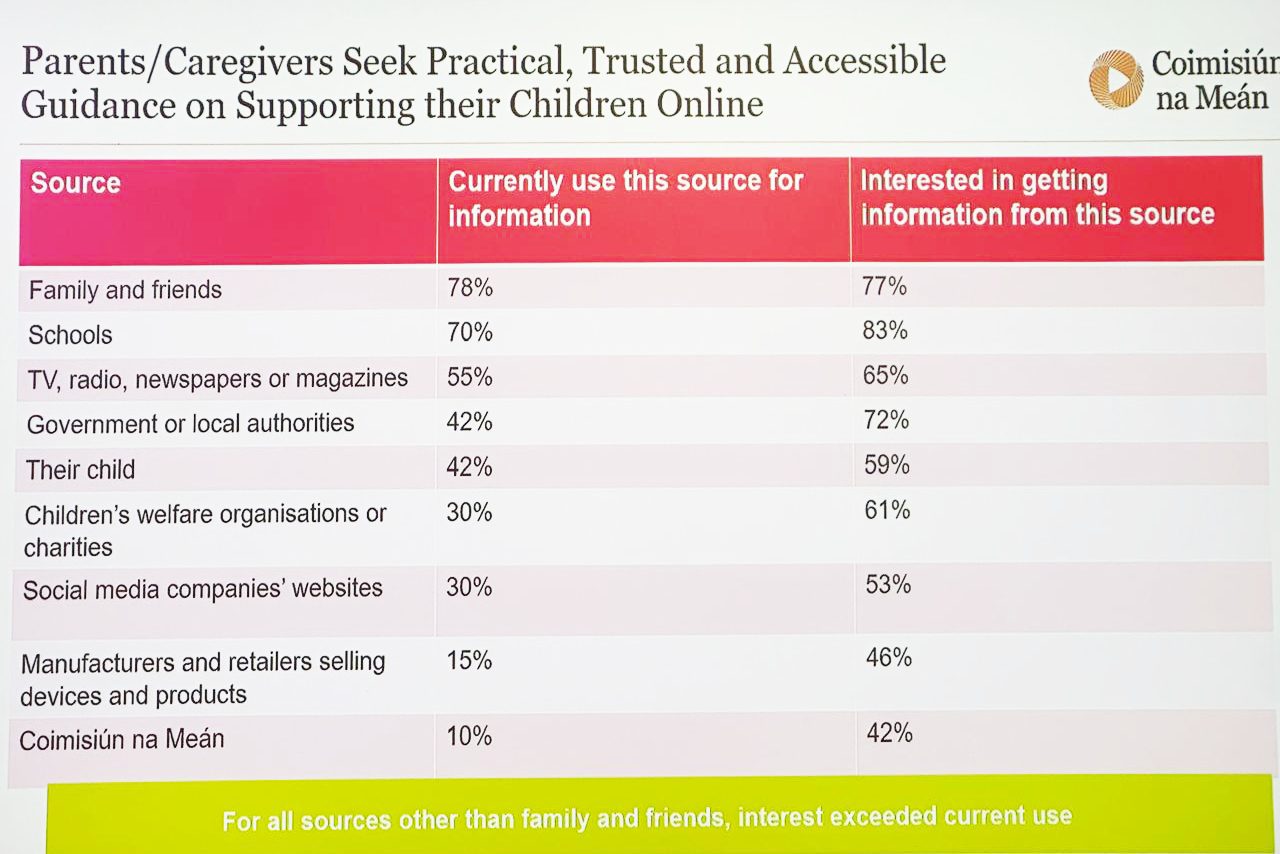
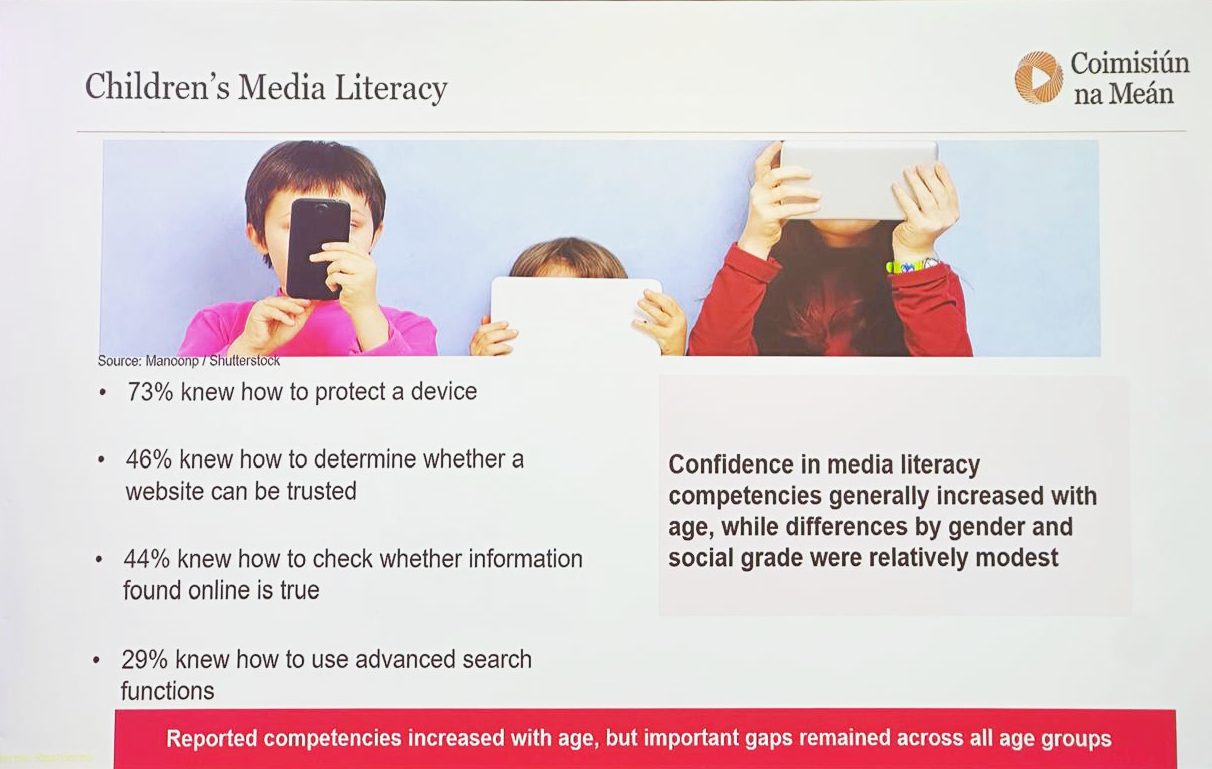
The session also presented the findings of the report “Children’s Safety Online: Digital Life,” which drew on two studies conducted by the Irish Commission for Digital Technologies (Coimisiún na Meán)—one involving children and the other their parents or guardians. Its main findings indicate that children’s digital engagement has become routine (74% of children aged 9–17 use a smartphone daily or almost daily), and that digital risks are increasing alongside digital interaction.
Among the conclusions are the following:
- Children with disabilities face greater risks online;
- Platform safety features are useful, but not always visible to children;
- Parental mediation and parental supervision are associated with a safer online experience for children;
- there are significant differences in how children and parents perceive online experiences;
- attitudes toward a potential ban on social media are mixed, and so on.
Representatives of youth groups, parent organizations, and digital platforms—including Google/YouTube and TikTok—were also involved in the discussion on the safety of minors online and possible measures for safer use of online platforms.
As a reminder, on the first day of the 64th meeting of the European Platform of Regulatory Authorities, participants discussed the issue of declining trust in the media, the rise in news consumption on video platforms, and practical steps that media regulators can take to strengthen that trust.

