


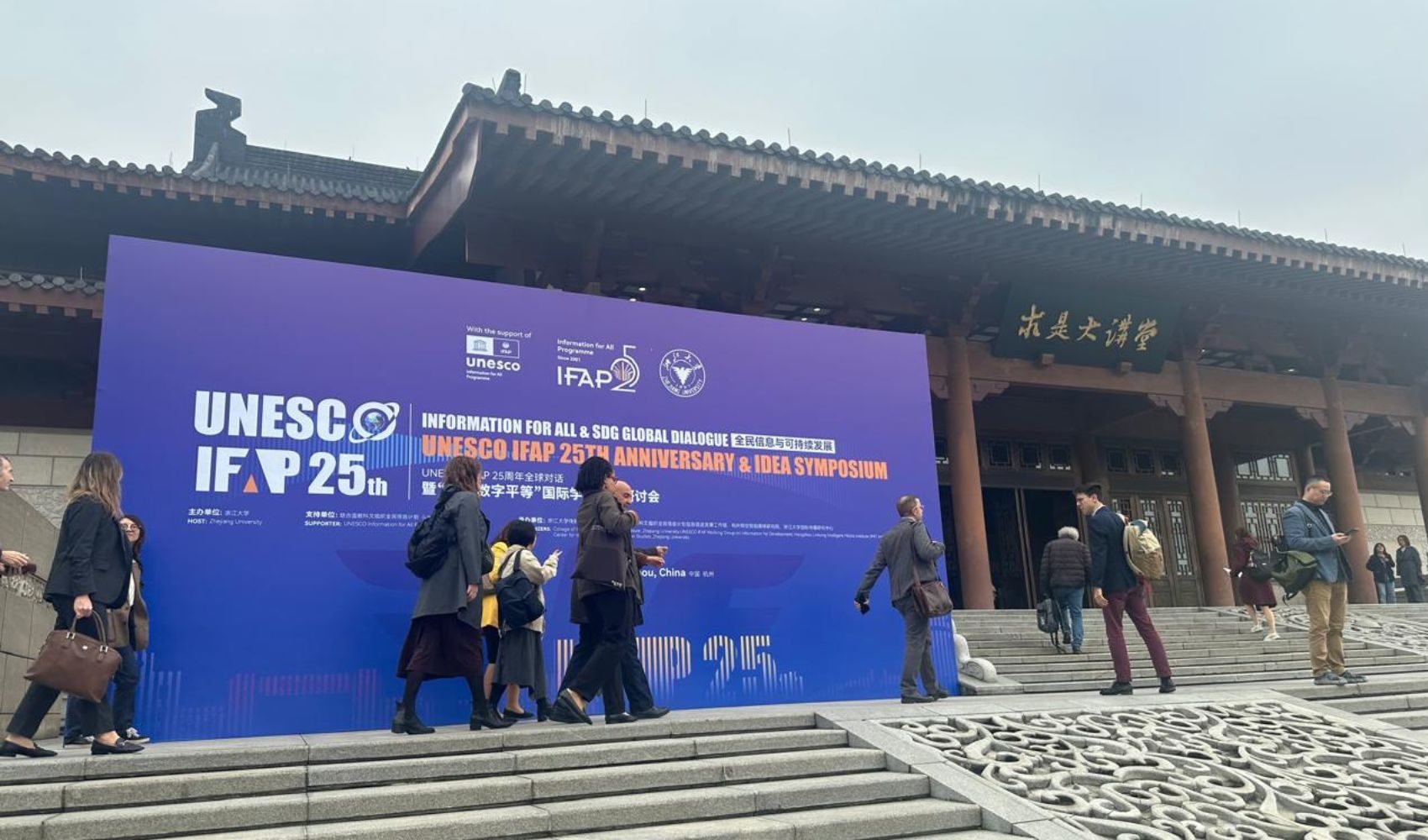
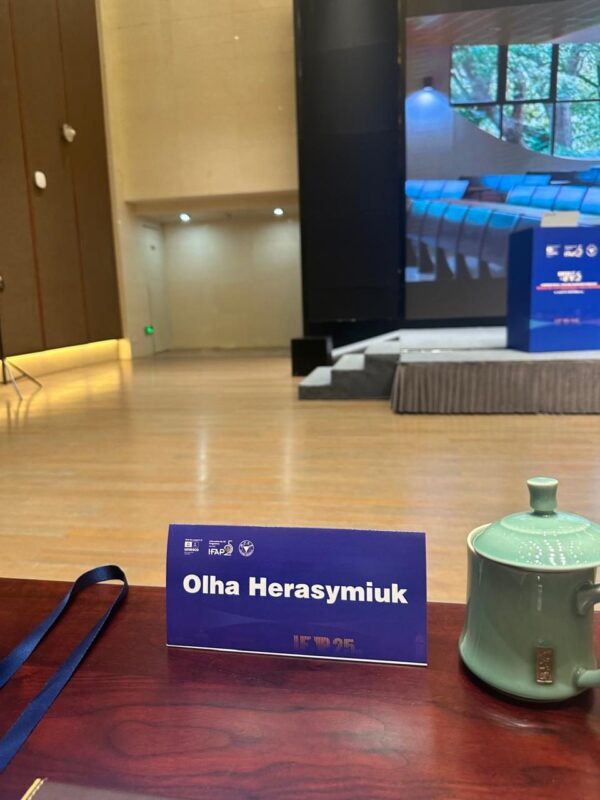
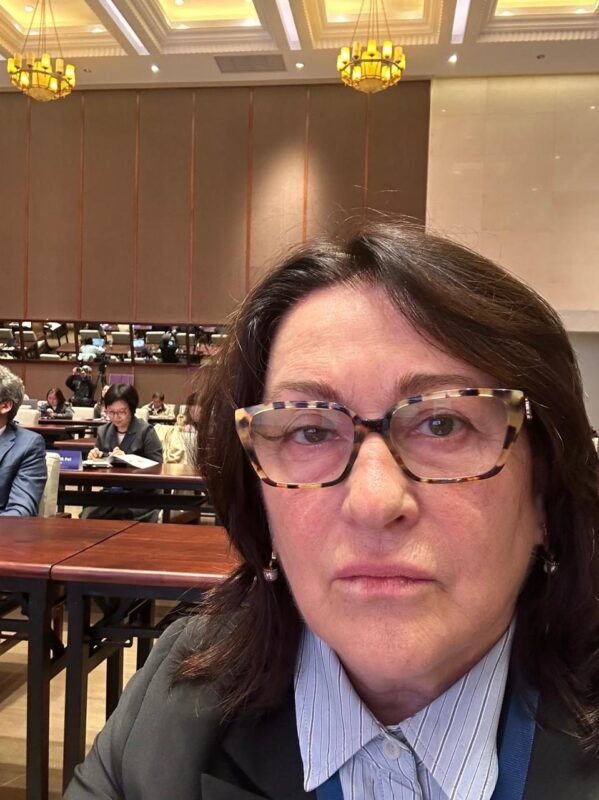
Olha Herasymiuk, Chair of the National Council and National Committee of the UNESCO “Information for All” (IFAP) Programme, is participating in the Global Dialogue marking the programme’s 25th anniversary, taking place in Hangzhou (PRC) on November 6–7. She is representing the IFAP Bureau as one of its vice-chairs. The main themes of the events are the development of artificial intelligence and ensuring global digital equity.
Olha Herasymiuk is participating in the event as Vice Chair of the Bureau of Intergovernmental Council of IFAP. In this capacity, she represents Ukraine for the 2026–2027 term.
The partners of the Global Dialogue are the International Alliance for Digital Equality (IDEA) and the College of Media and International Culture (CMIC) at Zhejiang University (China). The Dialogue is intended to serve as a platform for summing-up of the IFAP programme’s 25 years of activity and identifying future priorities.
Today, one of the greatest challenges in the information space is the development of artificial intelligence. In this context, it is not only people’s critical thinking and their ability to work with AI that are important, but also the algorithms and data on which the models are built and through which they are trained.
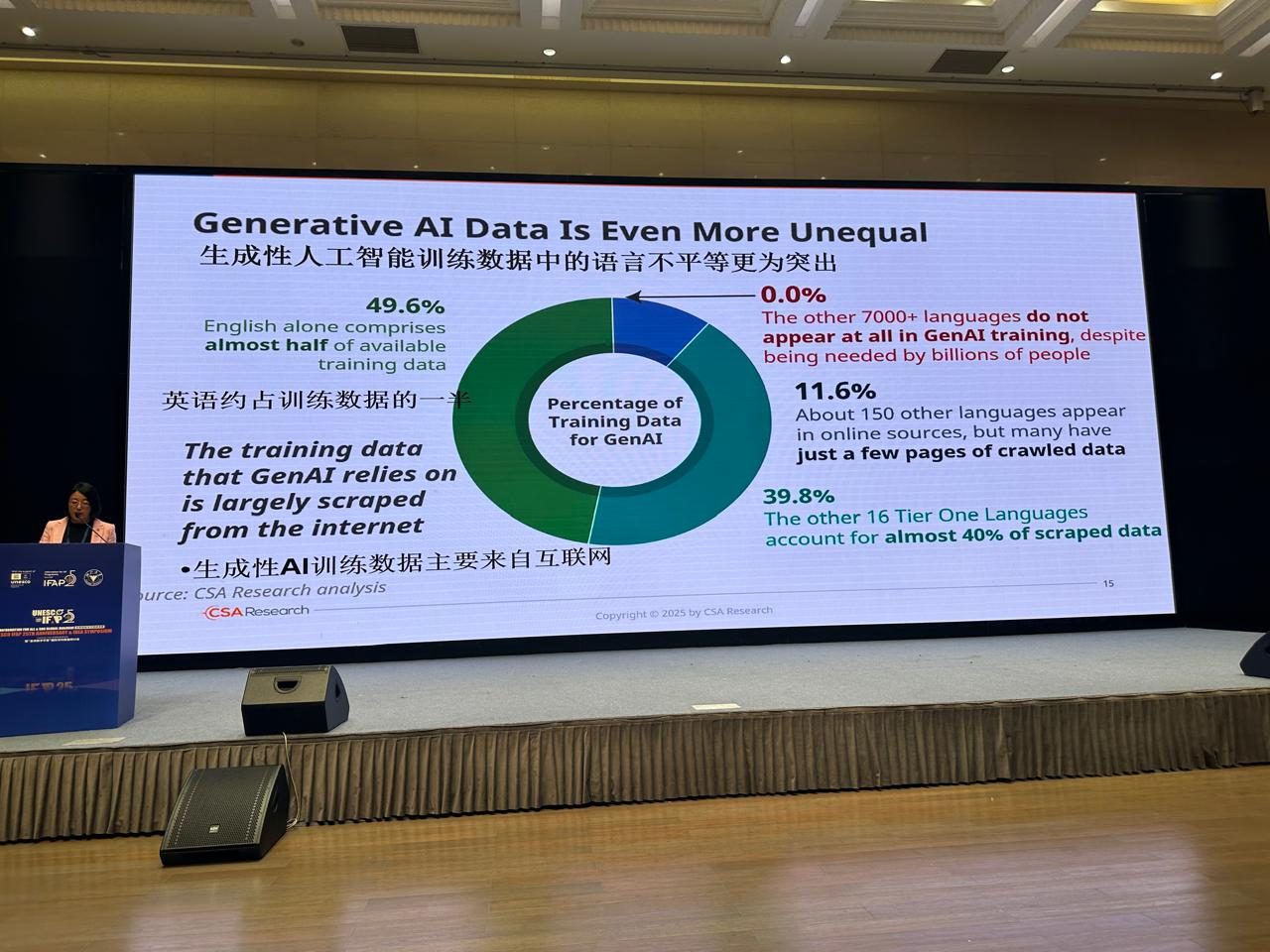
During one of the roundtable discussions on the first day of the Global Dialogue, data from a study by the Network of Civil Society and Academic Organizations on AI Ethics and Policy was presented. According to the study, 49.6% of all training data for artificial intelligence models is available in English. Another nearly 40% of the data is distributed among the 16 most commonly used languages. At the same time, 150 languages (11.6%) are represented online by only a few scanned pages, while the remaining more than 7,000 languages are not represented at all in AI training data.
Artificial intelligence is redefining the concept of digital inequality. Today, the issue is not just about internet access, but about who has computing power, whose languages and cultures are represented in algorithms, and who owns the data.
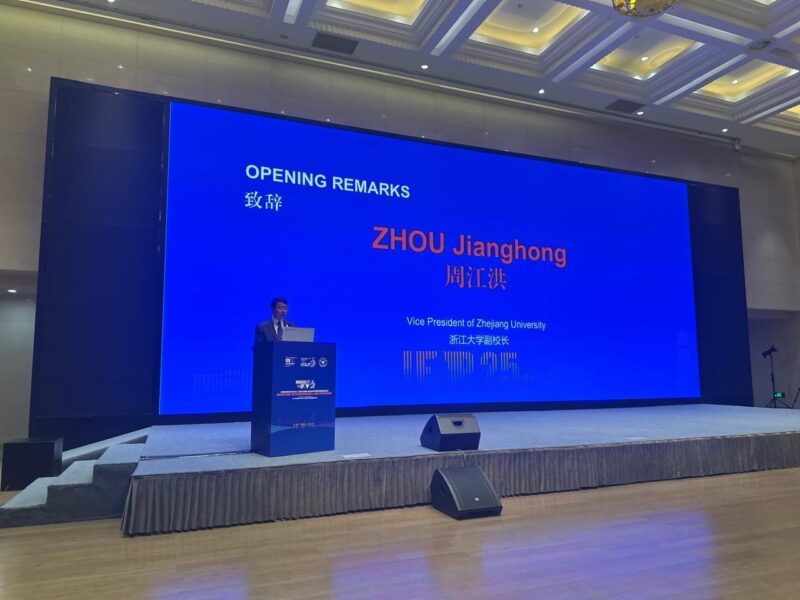
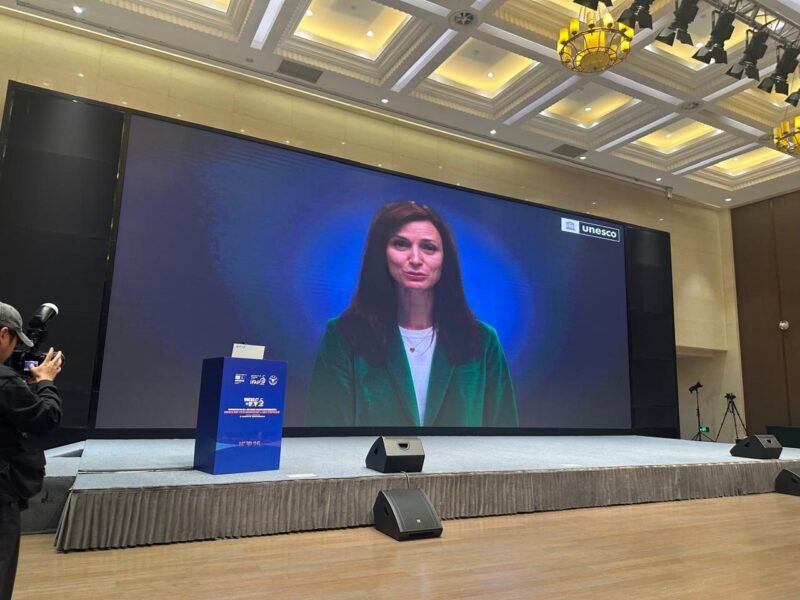
The Global Dialogue marking the 25th anniversary of IFAP is taking place in the campus of Zhejiang University—one of China’s most prestigious and oldest universities. The event is attended by representatives of UNESCO member states, international organizations, specialists in the field of communication, information, and media, as well as scholars and experts.
Ukraine marked the 25th anniversary of the IFAP programme at the national level by hosting a large-scale conference attended by representatives of government agencies, civil society, the media, and specialists in the field of communication and information.

